


Connect with:
Friday, May 22, 2026
Home2013July (Page 2)

Amanda Anderson is a Graduate Fellow at CHMP

Amanda Anderson 2

There’s a closet in my apartment that I generally tend to avoid. Besides housing my winter coats, it’s where I hide my toolbox and vacuum cleaner. Dark and crowded, every time I venture into it for my hammer, I become instantly angry at the chaos. It’d be easy enough to organize and light, but who wants to do that? Instead, I curse audibly when forced to enter, and all other times avoid it.

While reading about Nelson Mandela’s current clinical status and lack of documented end of life planning, I couldn’t help but think of my disorganized, but highly necessary storage space.

Death is a topic that plagues every living thing, but our society has decided it is worth talking about only when the occasion arises or is near. Hence, we are left, or leave our loved ones, to make decisions that we likely never spoke of in our healthy life. Cramped and disorganized, we’re forced to piece together parts of the puzzle of illness care in the dark; would mom want to live on a ventilator, would dad be okay with a feeding tube, would I want to persist as a vegetable?
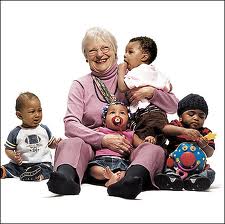
This is reposted from HEALTHpopuli, the blog of Jane Sarasohn-Kahn, a health economist and management consultant. Her company, THINK-Health is a strategic health consultancy that serves clients at the intersection of health and technology in the U.S. and Europe.

…and I’m not talking about [youtube=http://www.youtube.com/watch?v=w3PXucLotXk] here (or [youtube=http://www.youtube.com/watch?v=oAjIy3uPmv4]).

Most people (75%) still view phone calls as the communication mode that best bolsters their relationships compared with texting (66%), picture messaging (35%), sharing on social networks (31%), emailing (25%), , and video chatting (9%). U.S. Cellular, the mobile phone company, surveyed 527 customers in April 2013 to learn about how wireless communication can bring “Better Moments” to peoples’ lives. In particular, people say that mobile phones help them:

Ruth Lubic, CNM

Ruth Lubic, CNM

On July 1, the New York Times published an article by Elisabeth Rosenthal titled, American Way of Birth, Costliest in the World. What the title ignores is that the American way of birth also produces poorer outcomes for mother and baby.

We have overwhelming evidence that childbirthing centers SHOULD be the frontline for maternity care. These centers are usually managed and staffed by nurse midwives and use a midwifery–not an obstetrical–model of care. This model views birth as a life transition; the midwife doesn’t ‘deliver’ the baby but assists the woman in birthing her baby.

While some may argue that this is just a matter of semantics, the language of health care providers ‘delivering’ babies has led to views of the mother as passive participants who are not in control of this powerful event. My mother told me that, for my own birth in the mid-1900s, she was told to cross her legs until the obstetrician could arrive from the golf course and then she was given a general anesthesia and didn’t see me for 24 hours. Some women were restrained, given IVs, and were confined to a bed. No eating or drinking until after the delivery.