ACOs: Accountable for What?
0 Comments
My latest blog post for JAMA News



This is a guest post by Abby Lishon. She is currently a litigation associate at a large law firm in New York. She will be starting a PhD program in Criminology this fall and will be conducting her research on sex trafficking in Amsterdam.
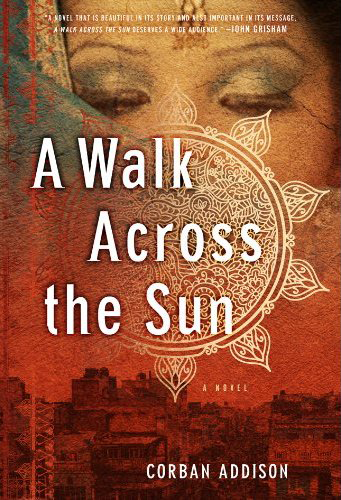
It was the middle of the workday on May 7th, but I couldn’t resist attending the New York City Bar’s luncheon featuring Corban Addison, the author of A Walk Across the Sun. Mr. Addison’s background appealed to me: he left law firm life to research and write about the human trafficking epidemic. I’m about to do the same.
The audience hung on Mr. Addison’s every word as he vividly described his inspiration, his experiences witnessing trafficking firsthand in Mumbai, and the state of the anti-trafficking movement. After watching the film, Trade, with his wife, Mr. Addison felt compelled to take action against trafficking. However, he was unsure of what he could do. A short time later, his wife suggested he write a book to raise awareness about the issue. After leaving the security of his partnership-track law firm position behind and immersing himself in the world of modern-day slavery for six months, Mr. Addison penned a novel based on the real-life tragedies of young girls trafficked for commercial sex in India.
David M. Keepnews, PhD, JD, RN, FAAN, a CHMP Senior Fellow, is an Associate Professor at the Hunter-Bellevue School of Nursing and the City University of New York (CUNY) Graduate Center. He is Editor of Policy, Politics & Nursing Practice, a journal focusing on nursing and health policy.
Riding the subway home recently, I noticed a Spanish-language ad placed by the New York City Department of Education (DOE). The ad, part of an effort to promote the new Common Core Learning Standards and exams being given to 3rd to 8th graders, bore a headline reading (in translation) “Higher standards. Different tests. It’s a new day.”
It ended with: “Deseamos prepararlos para la unversidad y las carreras técnicas”—“We want to prepare them [students] for college and technical careers.”
A few days later, I noticed an English-language ad headlined “This Spring, we’re aiming higher.” As I read it, I saw that despite the different headline, this was the English-language version of the ad I had read before. The text was largely identical to the Spanish-language version. However, I couldn’t help but notice that the last sentence was a little different:
“We want them prepared for college and a career.” Note: Not specifically a technical career—simply a career, in general.
This seemingly small discrepancy jarred me: The ads end with two different messages to two different audiences—English-speaking and Spanish-speaking families—about the futures they can anticipate for their children.
By now, you probably know of actress Angelina Jolie’s choice to undergo preventive double mastectomy, and her must-read op-ed in Monday’s New York Times.
In her specific case, the decision was a tough, but logical one given that the benefits of the procedure dramatically reduced future risk of breast cancer. It’s never an easy decision to undergo surgery. It must have been even more difficult for someone like Jolie, whose income is partly tied to her looks.
Double mastectomy isn’t the answer for everyone. Jolie was at very high risk because she is among the small percentage of women who carry the BRCA 1 and BRCA 2 gene mutation.
As Jolie points out, genetic testing is expensive, currently not covered by all insurance plans, and therefore only viable for a small segment of the population. “The cost of testing for BRCA1 and BRCA2, at more than $3,000 in the United States, remains an obstacle for many women.” There are other forms of breast cancer – which may be more difficult to detect and treat.
What are the choices for those women who do not have the resources for such gene testing? Disparities along racial, education, and socioeconomic lines in both incidence and screening are well documented. Women who have other risk factors, who are without access to the top oncologists, plastic surgeons, and other care providers need to know their choices.
This guest post was written by Jasmin Zaman, a student at the Hunter-Bellevue School of Nursing and the Macaulay Honors College at the City University of New York. Last fall Jasmin took a course in narrative writing for nursing students at Hunter taught by CHMP senior fellows Joy Jacobson and Jim Stubenrauch.
11:46 PM … 12:45 AM … 3:30 AM …
Here we go again. As I toss and turn I lose my hopes of getting eight hours of sleep. It’s Tuesday night. That means tomorrow morning I have to meet my classmates at the lobby of the Hunter dorms to make it to our 7:55 AM meeting for clinicals next door. We have our psychiatric rotations at Bellevue, and I am desperate to catch up on as much sleep as I can.
I was against caffeine when I first entered college but on Tuesday morning I haul my fatigued body to the nearby caffeine watering hole—Dunkin Donuts. My mother always warned me about the evil grasp of coffee and energy drinks, as she believed they were the culprits of my unexplained heart palpitations.

Nursing student Jasmin Zaman and friend
Suffering from insomnia is something I have come to accept. I share this constant battle with my classmates, and it is comforting to know I am not alone. We become so consumed by the day’s activities and by tomorrow’s schedule that it is almost bizarre to just stop—and sleep. Not sleeping the day before clinical days, especially, is a recipe for disaster. An internal disaster. My body fights itself to understand the cause of this sleep deprivation. Without the stimulant effects of coffee my body shuts down. I have often caught myself dozing off on the floor. But if I move into the maintenance phase of caffeination with stimulants like Red Bull or other energy drinks, I’m contributing to my sleeplessness throughout the night.
Studies have shown that the classic theory of sleeping one-third of the day does not correlate with feeling well-rested. Factors such as age and lifestyle contribute to the quality of sleep and feeling rested. It does not matter how much sleep you get, but rather the quality of it. Quality over quantity is best. Rapid eye movement, or REM, sleep, considered one of the most crucial stages of the sleep cycle, is “the only phase of sleep during which the brain is as active as it is when we are fully conscious, and seems to offer our brains the best chance to come up with new ideas and hone recently acquired skills,” says David Randall in a an op-ed, “Rethinking Sleep.”
Amanda Anderson, RN, BSN, CCRN, a native-Buffalonian-turned-New-Yorker, is celebrating her 6th Birthday as a MICU nurse this June. She’s currently shooting for two master’s degrees from Hunter Bellevue’s award-winning nursing school, writing with students and for herself, and dodging yellow cabs while speeding around the city on her little bike. Follow her musings here, via @12hourRN, and on her blog www.thisnursewonders.wordpress.com.

But some mornings, if I push past it all and glue myself
down, my story is there, singing its way into existence. Pieces of it, lines of it, waves of text and feeling and thought. Past the distraction of the newspaper landing on my doorstep, the plants asking me for water, last night’s dishes crowding the sink.
This morning, I’m following the fleeting voice of my story like Alice, running through Wonderland in search of that crazy cat. I’ve managed to get the coffee brewing, I’ve warded off my internet addiction for a moment, and here I am.
I’m thinking about a woman I met with yesterday, a grad student and professional nurse. This woman is much older than I, has a family, and a well-established nursing career here in New York. She is studying in a graduate program at Hunter, and our paths crossed last night because, for professional experience and a small pittance, I help graduate students write papers. Despite moderately solid writing, this student’s latest paper happened to garner extra attention from her professor. For plagiarism.
This post was written by Jennifer De Jesus a student in the Macaulay Honors College at Hunter and an avid movie watcher. She is also an employee of the Health Professions Education Center, which has one of the largest collection of health films in the New York City area.
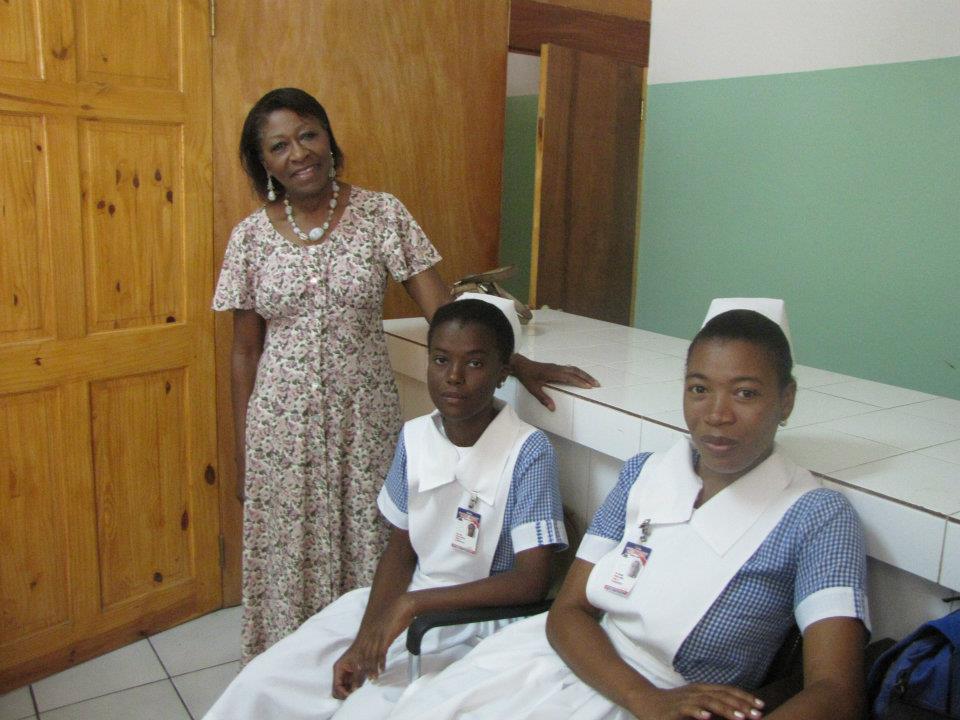
photocredit: Promoting Health in Haiti
It has been three years and three days since the tragic 7.0 earthquake in Haiti claimed the lives of an estimated 316,000, injured 300,000 and left an overwhelming 1,000,000 homeless. The devastation only seemed to continue, as days and weeks following the earthquake only revealed an even more alarming and frightening reality.
Easily lost behind the constant coverage of the earthquake’s impact was one event that has shaped the lives of thousands of Haitians and is undermining great efforts to rebuild the country. Frontline’s “Battle for Haiti” focuses on the criminals that escaped Haiti’s National Penitentiary the night of the earthquake. The majority of these criminals were gang bosses and kidnappers, which were only jailed in the first place by an all-out military onslaught by the Haitian police and armed United Nations peacekeepers between 2004-2007. Now dispersed throughout Haiti, these criminals are once again creating an atmosphere of fear and violence in an already extremely difficult environment.
This guest post was written by Karen Hardin, MSN, RN, NE-BC, CNE, the director of the bachelor of science in nursing programs at Marian University, Indianapolis, IN. In 2012 she attended Telling Stories, Discovering Voice: A Writing Weekend for Nurses, offered by the CHMP’s program in Narrative Writing for Health Care Professionals.
 Forty years ago this summer I graduated from a diploma nursing program at a large city hospital. I agreed to stay on as a nurse and was assigned to the female surgical unit. I was pulled, on my first day, to the male unit across the hall, which became my home for the next three years. I progressed from new graduate to charge nurse to head nurse within a year. Now, that hospital is moving to a state-of-the art facility, and that move, along with my 40th anniversary, have put me in mind of 1973, a year of many firsts for me: first job, first paycheck, first white uniform, first patient death.
First death: I knew James (not his real name) for only the last hour of his life. I’ve never forgotten him or the events of that day.
The day started with morning report from the night-shift charge nurse, Mac. We all called each other by last name, but we called her Mac. She sat at the head of the table in the nurses’ station at 7 AM. I, the only RN at the table, sat next to her. She’d started working there the year I was born.
Immediately after assignments were posted, I made my first set of rounds. James was in the second bed by the window in 16B, one of two four-bed rooms. He had been in the ICU until the night before. I took the clipboard from the foot of the bed and looked through his records: temperature, pulse, blood pressure, intake, and output. I introduced myself as the day-shift charge nurse. I did a quick head to toe. I checked his nasal canal. I checked the IV rate, solution, and site. I made sure that his abdominal dressing was dry and intact, his pedal pulses were present, and he was alert and oriented times three. I assessed the other three patients in the room and as I left, James asked me, “What do they call you around here, Little Mac?”
This is a reposted from Primary Care Progress. CHMP and Primary Care Progress are celebrating Nurses Week together modeling collaboration and team. That’s the way we like it!
Shocked by a tense interaction she witnessed between a nurse and a resident, this nursing student saw the urgent need for nursing and medical students to learn to work together and communicate with each other.
 By Karrah Hurd
After six weeks in the accelerated bachelor of science in nursing program at the University of Rochester, I was already on clinical rotations in the hospital. I was learning clinical functions that my second-year medical school friends had no idea how to perform: catheterizations, wound dressing changes, how to calculate and administer medications. There’s just not enough time in the first two years.
On the other hand, in the nursing program, our heavy clinical schedule doesn’t provide us much time to perfect writing SOAP notes (or subjective/objective assessment and plan), for example, which medical students practice every day. It was clear that we were each acquiring distinct knowledge and skills that we could share with each other — if given the chance.
I was living with several medical students, so we had what I learned would be a rare opportunity to share our knowledge with each other. I taught them how to administer different medications for their voluntary flu clinics and calculate medications. They taught me how to write an awesome SOAP note, how to perform more specific subjective and objective assessments, and ways to remember complex pathology and physiology concepts. Working together, we learned from each other and came to appreciate the unique skills that each of us could bring to patient care. However, I quickly learned that this type of cooperation didn’t always carry over to the hospital.